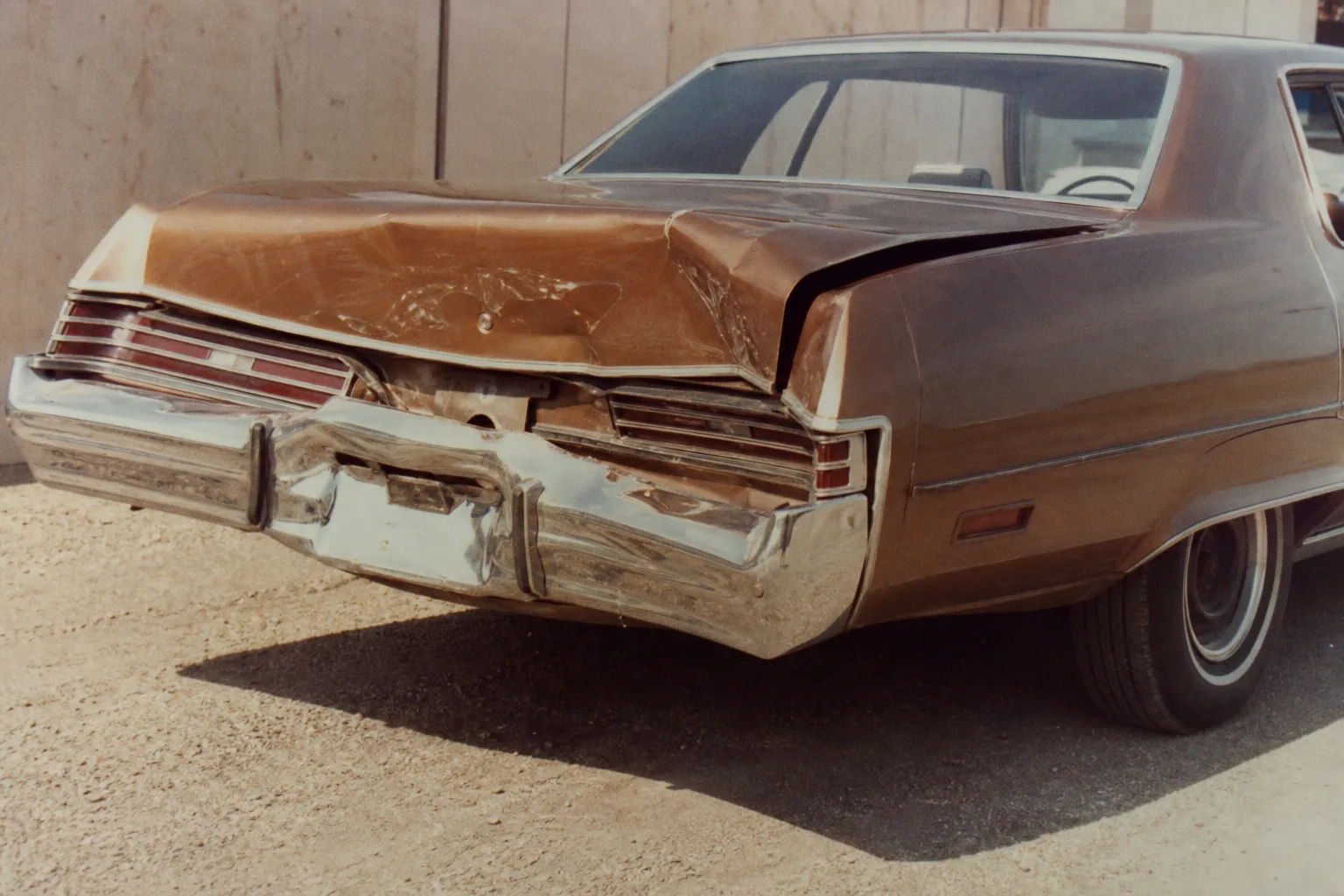
From the collision report to the signed release, a plain walk through the sequence an Oklahoma motor vehicle injury claim follows, and which steps have real rules attached.
A driver stopped at a light on Cache Road in Lawton is hit from behind by a pickup doing perhaps fifteen miles an hour. The bumper cover cracks, the tailgate of the pickup barely marks, and both drivers agree at the scene that nobody is hurt. An officer takes information and leaves. The next morning the driver cannot turn her head to check a blind spot, and by Thursday her right hand is tingling. Everything that follows for the next eight to fourteen months was set in motion in those two days, and almost none of it is obvious while it is happening.
The report, and the clock that starts without announcing itself
Oklahoma requires drivers to report collisions involving injury, death, or property damage above a dollar threshold fixed by statute, and in practice the officer's report is the document both insurers read first. It is not evidence of fault in the way people assume, and an officer's opinion about who caused the crash is not binding on anyone, but it fixes the date, the vehicles, the witnesses, and the initial account each driver gave before anyone had thought about money. The second clock is the statute of limitations, which in Oklahoma allows two years from the date of injury to file suit. That deadline is absolute in a way nothing else in the process is. Miss it and the claim is worth nothing regardless of how badly the person was hurt.
The cost at this stage is almost entirely a cost of omission. A report that records no complaint of injury, because the adrenaline had not worn off yet, becomes the first line of the adjuster's argument two months later. Correcting it is possible, through a supplemental report or a documented same-week medical visit, but it costs credibility that a prompt urgent care record would have cost nothing to establish.
Two insurers, two files, and one recorded statement request
Within a few days the at-fault driver's carrier opens a liability file and assigns an adjuster, and the injured driver's own carrier opens a separate file covering whatever first-party benefits the policy contains: collision, medical payments, uninsured and underinsured motorist coverage. Oklahoma sets minimum liability limits that are low relative to a genuine injury, which is why the uninsured motorist portion of a person's own policy matters so much and why carriers must offer it in writing. The liability adjuster will call, will be pleasant, and will ask for a recorded statement. There is no legal obligation to give one to the other side's insurer. There usually is a cooperation duty to one's own.
That distinction is where people give away money without noticing. A recorded statement taken in week one, before an MRI, locks a claimant into describing symptoms she does not yet have language for, and the transcript follows the file to the end. The National Highway Traffic Safety Administration is responsible for federal motor vehicle safety standards and crash investigation, and its research has long recognized that soft tissue and disc injuries frequently present days after impact rather than at the scene, which is exactly the gap an early statement papers over.
Treatment records are the claim, not a record of the claim
Nothing in an injury file carries more weight than the medical chart, because the chart is the only part of the story written by someone with no financial stake in it. Gaps in treatment, a six-week stretch with no visits because work got busy, are read as recovery. Inconsistent complaints are read as exaggeration. The billing side matters separately: hospital and provider liens attach under Oklahoma law, health insurers assert subrogation rights, and those claims are paid out of the settlement before the injured person sees anything. A settlement described as thirty thousand dollars is not thirty thousand dollars in hand, and the difference is negotiated, not fixed.
This is the point where many people first ask whether representation is worth what it costs. A contingency fee is real money, typically a third of the gross recovery, and it is worth weighing against the specific arithmetic of a specific file rather than in the abstract. Consulting a Lawton Car Accident Lawyer before treatment ends generally costs nothing at the consultation stage and clarifies whether lien reduction, underinsured coverage, and disputed liability are live issues in the file.
The demand, the counteroffers, and the release
Once treatment stabilizes, the claim is assembled into a demand: records, bills, wage loss documentation, and a stated figure. From there, the process has almost no rules at all. The adjuster's first counteroffer is a negotiating position, the exchange that follows is unregulated, and the only hard constraint is Oklahoma's modified comparative negligence rule, which reduces recovery by a claimant's share of fault and bars it entirely if that share exceeds half. Knowing that the demand stage is pure negotiation, while the fault threshold and the two-year deadline are not, tells a reader precisely where in the sequence they are standing.
The release ends it. Signing transfers the disputed claim for a fixed sum, closes every element of injury from that collision including ones that surface later, and is very difficult to undo. It should be read line by line, particularly for language covering unknown future conditions and for confirmation that liens have been resolved rather than merely acknowledged.
The sequence is the same in every file. What varies is how much of it a person walks through knowing which step still has room in it.